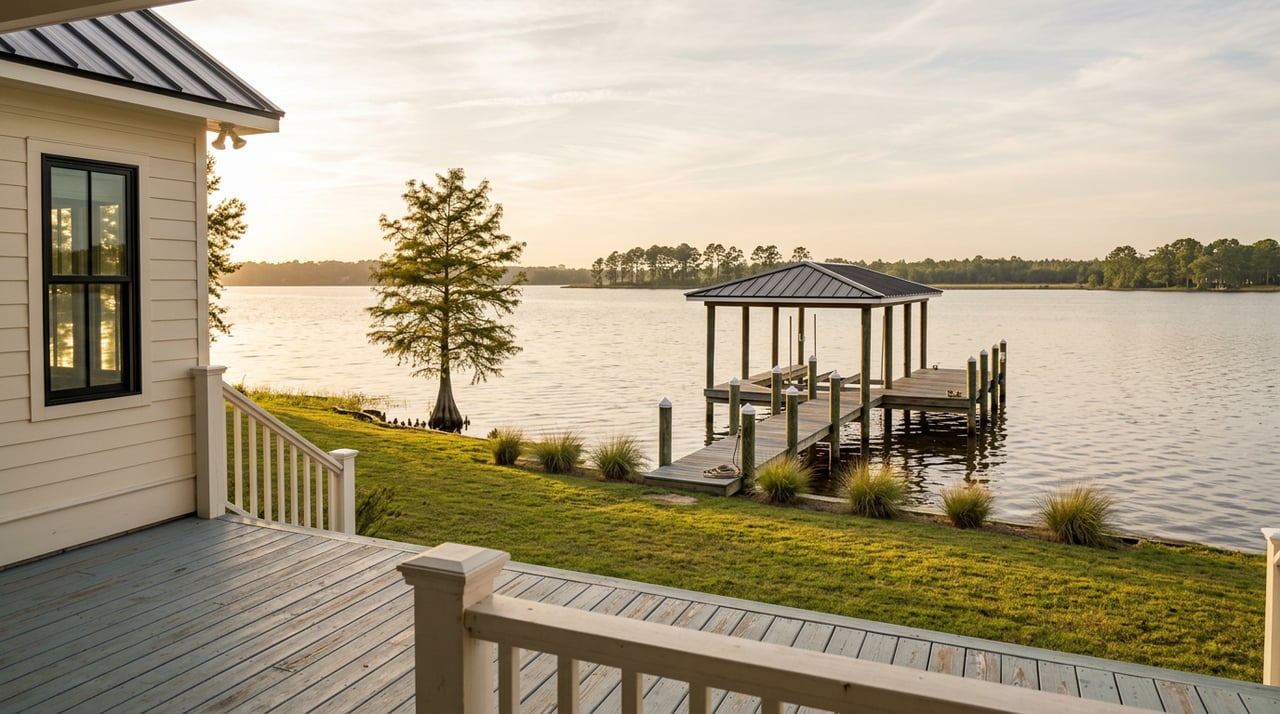
A buyer who has already shopped Lake Murray or Lake Keowee walks into a showing near Cross Hill with a mental checklist. Dock permit: check with the utility company. Shoreline rules: whatever Dominion or Duke Energy says. HOA covenants: probably strict, probably expensive.
The specifics are different here.
Who Actually Controls the Water
Buzzard's Roost Dam went up between 1935 and 1940, and lake management passed through a few hands after that, first the Greenwood County Electric Power Commission, later a lease arrangement with Duke Power, then Santee Cooper starting in 2007, and a 2020 power generation agreement with Lockhart Power. According to Greenwood County, the county formally created a Lake Management Department in 2006 to handle permits, encroachment registration, camping reservations on Goat Island, and shoreline compliance.
That distinction shows up immediately in the numbers. The county's current guidance puts the annual dock registration fee at a flat rate, due each September 1, and does not layer on a separate construction review charge for existing structures. Duke Energy's published fee schedule for its lakes lists a $350 dock permit charge plus a $500 Habitat Enhancement Fund fee for new construction, a combined cost that a Lake Greenwood buyer coming from Keowee or Hartwell would expect to pay here and simply won't.
| Lake Greenwood (Greenwood County) | Duke Energy fee schedule | |
|---|---|---|
| Annual dock fee | See county guidance | See Duke Energy's published fee schedule |
| New construction fee | See county guidance | See Duke Energy's published fee schedule |
The fee comparison is one part of due diligence. Confirm the permit and registration records for a property before closing.
The Lake Doesn't Sit Still, and Neither Should Your Timeline
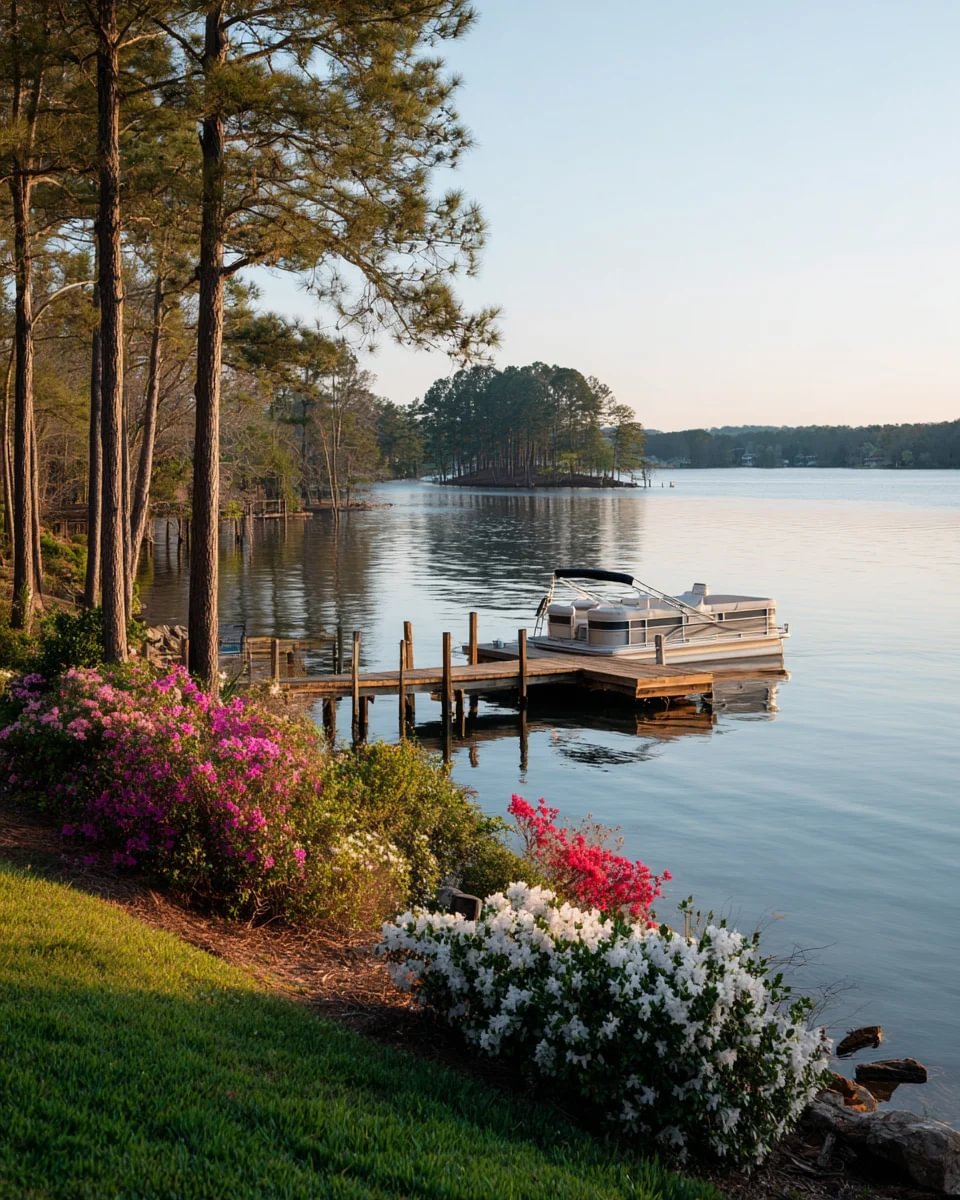
Lake Greenwood operates under a Rule Curve that sets the target water level by season. According to Connect Lake Greenwood, full pond sits around elevation 439. Starting in late October, the county begins drawing the lake down, typically to around 434.5, and holds it there until it starts raising the level again in late January. That five-foot swing is intentional. It gives contractors a low-water window to work on seawalls and dock substructures without fighting summer boat traffic and full-pool depth.
For a buyer, that means a showing in July and a showing in December can present two different versions of the same dock. A structure that looked solid with water lapping at the decking in summer might sit well above a dry, exposed bank in January. If your due diligence period lands during the drawdown, ask your inspector to note water depth at the dock relative to the posted Rule Curve elevation rather than relying on what you see that day.
For a seller, the same calendar works in your favor if you plan around it. Winter, when the lake is low, is the window contractors use for seawall repair and dock substructure work, which means a seller who wants dock or shoreline issues resolved before listing should be scheduling that work in the December through January window, not scrambling for a contractor in June when the water is high and every dock builder on the lake is booked solid.
What "The Dock Conveys" Actually Means
Listing sheets often say the dock conveys with the sale, and buyers tend to read that as settled. It isn't. A dock permit on Lake Greenwood is tied to a specific parcel and its registration history, not automatically reissued to a new owner just because the deed changed hands. County guidance is direct about this: if there is no dock already in place, or if the existing dock's permit status is unclear, that confirmation is supposed to happen during your due diligence period, not discovered after closing.
The rules governing what can legally be out there are specific enough that a permit doesn't just rubber-stamp itself. MasterDocks' current guidelines cap dock length at 110 feet and limit any dock to no more than one third of the width of its cove. No dock may sit within 20 feet of a neighboring dock. Boathouses have to be open on the sides. Davis Docks' FAQ says enclosed boathouses are not permitted on Lake Greenwood. When the county denies a permit, the two most common reasons are property line disputes and protected critical habitat areas along that stretch of shoreline.
None of this means lake property here is harder to buy. It means the paperwork trail looks different than what a buyer coming from a Duke or Dominion lake expects, and the gap between "the seller says it conveys" and "the county has a current, valid registration on file" is exactly where a deal can stall in the final weeks.
Before you write an offer on anything with a dock attached, build these into your due diligence list:
- Ask the seller for the dock's current registration status directly from Greenwood County Lake Management, not just a verbal assurance
- Confirm whether the parcel has a documented history of permit denials tied to property lines or habitat designation
- Get the septic permit history and most recent soil evaluation if the home is not on public sewer
- Verify water and sewer service parcel by parcel. Community name alone does not tell you what utilities a specific lot has
- Read the HOA covenants, or confirm in writing that none exist, before assuming what you can and cannot do with a boat, an RV, or a short-term rental
Same Lake, Different Rules Depending on the Street
Lake Greenwood spans roughly 11,400 acres across Greenwood, Laurens, and Newberry counties, and the utility picture changes block by block in a way that surprises buyers who assume one community's setup applies lake-wide. Some communities, like Stoney Point, sit close enough to existing infrastructure that public water, public sewer, and gas are all available, meaning a buyer there skips the well and septic conversation entirely. Other established lakefront neighborhoods, including Watersedge and sections of Eagles Harbor, run on private wells and onsite septic systems.
HOA structure follows the same pattern of no single lake-wide standard. Other communities run the opposite direction. The Plantation, a gated community on the lake, has been marketed with a club membership carrying a $25,000 joining fee layered on top of the home price.
If you already know Cross Hill is the right fit and you want the fuller picture of what daily life and lake access look like here, our buyer's overview of Lake Greenwood living around Cross Hill is a useful next stop. This piece is about what happens after you've made that decision and you're moving toward an offer.
For buyers building new or replacing an aging system, confirm address assignment through the county or town office so utilities can process service requests.
A Few Questions Worth Settling Before You Sign
Does a Lake Greenwood dock permit automatically transfer to a new owner? Not automatically. Confirm current registration status with Greenwood County Lake Management during your due diligence period rather than assuming the listing description settles it.
Why would my closing timeline get affected by the time of year? Seasonal water-level changes can affect what you see at the dock. If your inspection or walk-through falls during a drawdown, ask your inspector to account for it when assessing dock and seawall condition.
Is the utility setup the same across every lake community? No. Public water and sewer availability, HOA structure, and septic requirements vary by specific neighborhood and even by parcel, not by the lake as a whole.
If you're weighing a purchase on Lake Greenwood, or you're a seller trying to time dock repairs and paperwork around the county's calendar instead of against it, the Bowman Home Team has walked this exact process with buyers and sellers across the Cross Hill area. Schedule a consultation and we'll go through your specific parcel's permit history, utility setup, and timeline before you're standing at a closing table with questions that should have been answered weeks earlier.
This article is general information, not legal, tax or financial advice. Consult a qualified professional about your situation.